#4 Into the Batverse: Tim Burton's Legacy on Sequels
It is quite difficult these days to go to the cinema without seeing a film that was once previously a comic book. While I shudder at the idea of a multiverse of endless sequels, prequels, and mashup franchises, never seemingly drawing up any resemblance of a “new” idea, I’m taken to this quote from Mark Twain (one of absolute favorite writers):
“There is no such thing as a new idea. It is impossible. We simply take a lot of old ideas and put them into a sort of mental kaleidoscope. We give them a turn and they make new and curious combinations. We keep on turning and making new combinations indefinitely; but they are the same old pieces of colored glass that have been in use through all the ages.”
 |
| Mark Twain portrait, 1907 |
From Shakespeare, to Colleen Hoover; from Chaplin to Tim Burton; artists of every generation are constantly influenced by the work of those who came before, and those who are working alongside them as peers. The stories these “great” artists have created are all an amalgamation of varied influences. Bob Kane, the original creator of Batman, was said to be inspired by Sherlock Holmes, Zorro, and even Leonardo DaVinci’s inventions in his creation of Batman.
 |
| Bob Kane's original Batman design. |
These inspirations all fit perfectly into the “concealed-identity-superhero” trope that Superman also occupies. All these factors of regurgitation create the same archetypical story, and are rooted in the human experience. Batman’s call to justice is rooted in his need to avenge his parent’s death, and to protect his home that he loves that gives him his community (can't forget his lady lover either). These qualities all make for a story that will last the sands of time. As generations come and go, they will be able to take the glass shards of “The Batman”, and craft new kaleidoscopic images of our hero that resound to the time they are living in. Tim Burton’s Batman isn’t going to be Christopher Nolan’s Batman… they are representative of two very distinct times in American pop culture, as well as distinct products of two very distinct artists. The flexibility of Batman’s plot and structure, compounded with its story being well-known to an “average” American, allows any artists to put their distinct imprint upon the work. Christopher Nolan’s Batman succeed with its very realistic depiction of the character in the genre of a realistic crime drama. Tim Burton’s approach was much more expressive and melodramatic in comparison, but succeeded for those exact reasons.
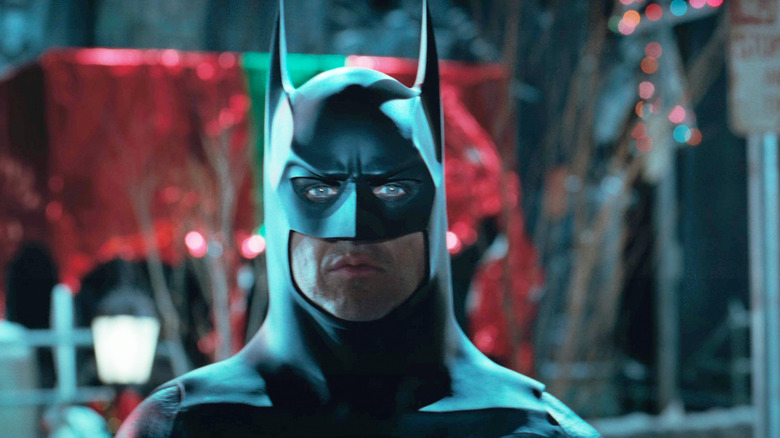 |
| Michael Keaton in Tim Burton's "Batman Returns" |
Tim Burton’s Batman was the first of its kind to resemble anything like the future MCUniverse. Batman (1989) and its subsequent three sequels, paved the way for a cinematic franchise rooted in comic book lore to be viable. Michael Keaton’s Batman was definitely a turning point for emotional complexity within superhero roles. The Adam West version of Batman and even the original 1978 Superman weren’t taken seriously and deflated the image and credibility of superhero films. They lacked complexity, emotional conflict, and were cornier than a corn maze. That changed with Tim Burton. Michael Keaton’s portrayal clashes with his butler, Alfred, and is flippant with his lover interest, Vicki Vale. These complexities allow the film to have emotional depth, and take it up a notch from being “another corny superhero film”.
Quite frankly, I do not enjoy comic books or comic book films. While I can see their inherent value, their cultural relevance, I just find the slough of films coming out are complete money grabs from audience pockets. The only superhero films I do enjoy and find myself rewatching are, funnily enough, Christopher Nolan’s Dark Knight Trilogy.
What Superhero films are your favorites? Are there any you can't stand?
Hard agree with all this. While it's true that there are relatively few new ideas under the sun, I think a big reason these Marvel movies feel so samey is that they forget the part where you turn the kaleidoscope to create a new shape. They're largely the same movies with only the superficial stuff being changed. The substance of the movies are just cannibalized corpses of the older Marvel movies. It's like a kaleidoscope and more a stagnant piece of stained glass. Great to look at once, but gets old after a decade and a half.
ReplyDelete